Skip to content

13 October 2026 / Marsio / Espoo

Schedule

Revisit the talks from SDLCAI in programme order. Slides and supporting resources appear with each talk, with recordings to follow.

Seminar day

Programme#

Doors open

#

Registration.

Opening

#

Welcome and framing for the day.

Industry perspectives

#

Talks or a joint session on applied AI in software development, ending with a brief panel.

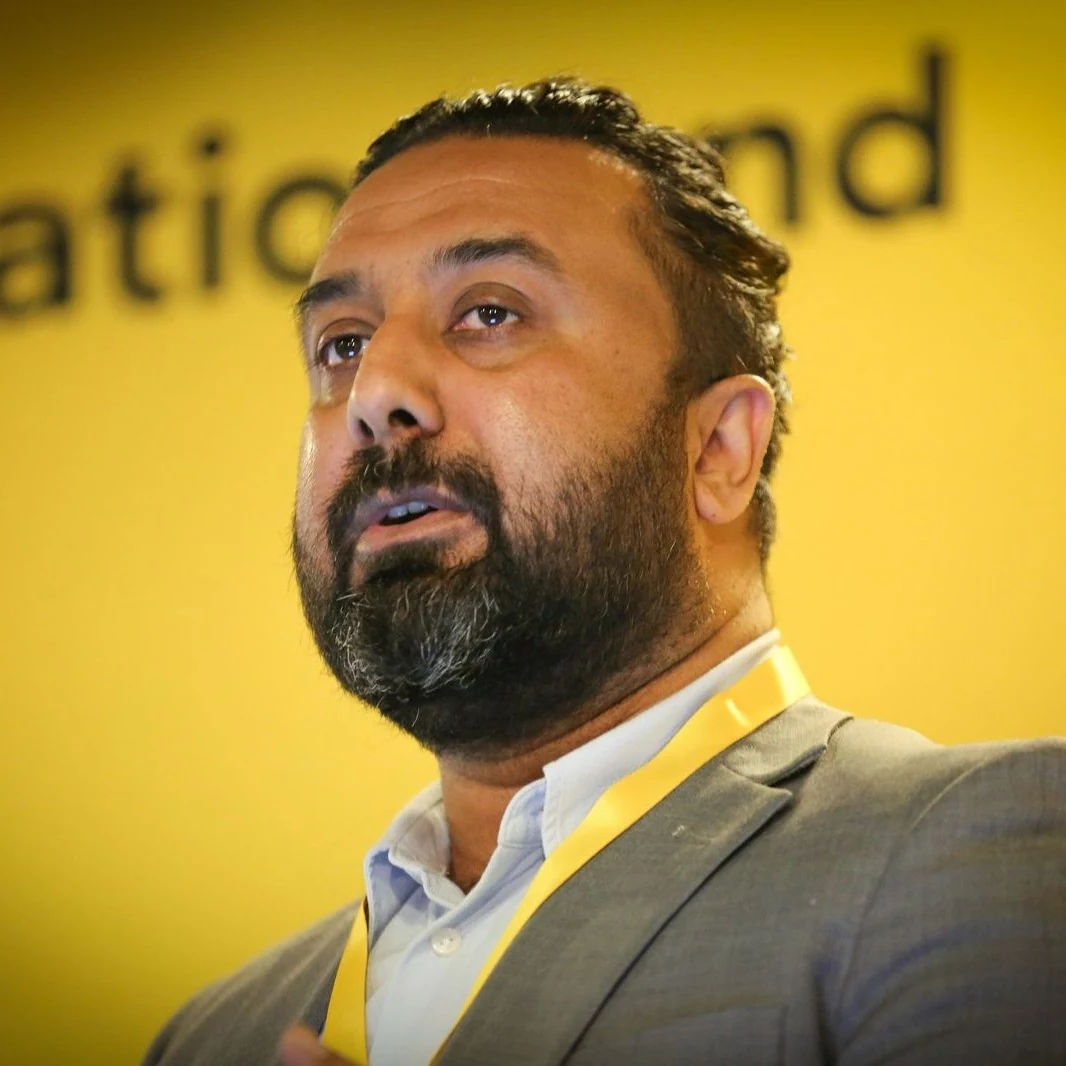
Mo Khazali

1978: The Last Good Year

About this talk

In 1978, Detroit was at its peak. General Motors, the largest of America's Big Three carmakers, hit record sales and profits.

Two years later, the Big Three had lost $4 billion between them, and Chrysler was asking for a government bailout. Meanwhile, Japanese carmakers were quietly taking over the American market with smaller, cheaper, and better-built cars.

Detroit's response was to spend tens of billions of dollars on automation, filling its factories with robots, betting that technology would close the gap.

It didn't.

Toyota and other Japanese manufacturers won by crafting a better system, one that built quality into every step of the factory, and a culture obsessed with building the cars customers actually wanted.

Today's software landscape is eerily reminiscent of 1978. AI has made coding largely automatable, and teams are shipping more than ever before.

Most companies are responding the way Detroit did: rolling out AI tools, and betting that the technology will close the gap.

It won't.

AI has sped up one part of the lifecycle. Everything around it, from deciding what to build to knowing it works, has stayed the same. The answer is to rethink the whole software development lifecycle: start from customer value, be rigorous about what gets built and what doesn't, and bake quality into every step of the SDLC, rather than inspecting it in at the end.

Mo Khazali has spent the last few years introducing AI into engineering organisations across multiple companies as a consultant, most recently rolling out an AI-native SDLC to a team of 160 engineers. In this opening keynote, he shares what he has learnt about building systems and the right culture around AI, and how to make sure this isn't your 1978.

Mo Khazali

Group Associate Partner at Theodo

Mo Khazali is Group Associate Partner at Theodo. Over the last three years, he has led teams as Head of Mobile and Solutions Architect, helping deliver high-impact products while scaling engineering practices across clients and developer communities. He has spoken at dozens of international conferences, hosted React Native London, and now focuses on how organisations can use AI to migrate between technology stacks in ways that are verifiable, safe, and efficient.


Ohans Emmanuel

Zero-trust harnesses for agentic software delivery

Materials forthcoming

About this talk

Coding agents have gone from autocomplete to something closer to a software factory. But delivery is more than writing code fast. Once the agent opens the PR, how do you know nothing regressed and that the original intent survived the trip from ticket to production?

This talk is about zero-trust harnesses. Every agent action is untrusted until something other than the agent proves it, and intent travels with the work through planning, building, QA, and production monitoring.

I'll run a feature end-to-end from a coding agent, break it the way it breaks in production, then show the harness catch it, route it back with evidence, and converge to green on its own. I'll cover the failure modes you'll hit: flaky gates burning the attempt budget, why that budget needs a ceiling, and what goes wrong when the orchestrator drifts from enforcing policy into chatting with the agent. I'll be specific about the decisions that kept the loop trustworthy rather than just impressive, and about how the harness gets stricter each time production teaches it something.

Then we go past the merged PR. A green build is a checkpoint, so we'll follow the same loop into monitoring and incident response, where production tells you what the gates missed.

Attendees will leave with an architecture they can put on the stack they already have.

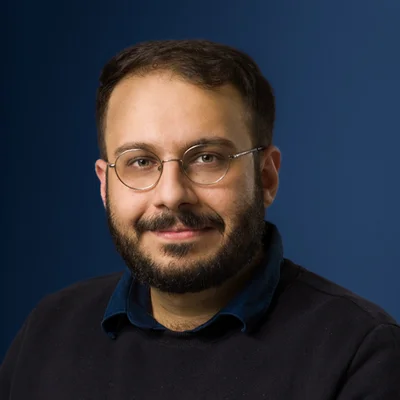
Ohans Emmanuel

Co-founder & CEO, Coldtea.ai

Ohans Emmanuel is the co-founder and CEO of Coldtea.ai and a technical author with more than five published books. Since 2017, he has written extensively about software and product development, with his work reaching more than five million readers. He specialises in turning complex problems into simple, reliable systems and building delightful user interfaces that hold up in the real world.

Jenni Kylmäkoski

Why Leaders Should Use AI Themselves and Eat Their Own Dog Food?

About this talk

It's easy to tell people to use AI. It's harder to understand what that actually feels like unless you're doing it yourself. This talk shares lessons from a leader's own journey of learning AI and how that experience helped her not only to effectively support change across her software organization but also how that helped her to do her own work.

Jenni Kylmäkoski

R&D Leader at Nokia

Jenni Kylmäkoski is an R&D leader at Nokia with experience in agile coaching, training, and product development leadership. Her work focuses on building motivated, high-performing teams and improving large R&D organisations through agile methods, DevOps, coaching leadership, continuous improvement, and collaboration across organisational boundaries.

Break

#

Hallway discussion.

Views from academia

#

Short research-driven talks on AI and software development.

Tapio Pitkäranta

The Agentic Probe: The Instrument of Agentic Discovery & Engineering

About this talk

AI coding agents now produce a deployable artefact in minutes. That collapses the cost of every hand-off in the traditional software lifecycle, so its phase structure has to be re-derived from the new economics. In this talk I propose that the long chain from mission to running software reduces to two complementary phases: Agentic Discovery and Agentic Engineering.

Agentic Discovery is an expedition into the problem domain, and its instrument is the agentic probe: a stakeholder-runnable artefact that an AI agent builds from the stakeholder's own words in minutes. A probe can be a prototype, a process simulation or a possible future. It is not a first draft of the product but an instrument for finding out what the product should be. Probes work in two modes. A problem-validating probe simulates the current way of working, its constraints and its pain, so stakeholders can confirm, correct or relax them. A solution-proposing probe is working candidate software that stakeholders evaluate by using it. In both modes a stakeholder (the Dreamer) works with an AI agent, while a human Orchestrator curates the queue between them.

The evidence comes from eight in-room field engagements with two partner organisations: 69 probes, about 140k lines of generated code, 100% probe-generation success, and intent-to-code amplification averaging 1:56 (up to 1:467). The most interesting finding is where the bottleneck went. First it was production. At seven parallel requests it became the human Orchestrator. Once we automated orchestration for engagements of about 100 invited participants, it moved to the supply of stakeholder ideas and the speed of stakeholder validation.

Joint work with Leena Pitkäranta (Aalto University).

Tapio Pitkäranta

Head of AI Development at Siili Solutions

Tapio Pitkäranta is Head of AI Development at Siili Solutions and a PhD candidate at Aalto University researching Software Agents and Generative AI. He has over 20 years of AI experience, spanning early semantic-web agent research, healthcare analytics entrepreneurship, and senior technology leadership across retail, healthcare, tax, and HR. He has served as CTO four times, including at RELEX Solutions during its unicorn-scale growth, and now focuses on applying agentic AI, multi-agent systems, and coding agents to real software delivery. His current research, with Leena Pitkäranta, studies Agentic Discovery: how AI agents turn stakeholders' own words into runnable prototypes, process simulations and possible futures within minutes, and what that does to the software lifecycle.

Joongi Shin

Generative UI for users, not just for designers

About this talk

How can we best assist users in creating their own user interface (UI)? The generative competence of large language models (LLMs) enables people to describe their task (e.g., creating a dinner event plan) to an LLM and get a functional UI on demand. This way of using LLMs is called generative UI (GenUI), which promises a future where people can create UIs to perform their tasks in a way they want, instead of learning to operate on UIs designed for general users. However, ongoing studies on GenUI mostly focus on assisting designers, whose goal is to design UIs. It remains unanswered how such technology can be adapted to everyday users whose goal is to use UIs for their tasks. In this talk, I will present our research work showing the strengths and limitations of three GenUI approaches in assisting task-oriented users and offer the underlying cognitive mechanisms of how each approach succeeds or fails. The talk will further offer three actionable insights into how GenUI needs to be advanced to be useful for users, not just for designers.

Dr Joongi Shin

Postdoctoral Researcher at Aalto University

Joongi Shin is a postdoctoral researcher at Aalto University investigating how emerging technologies and AI can support human creativity and design. His research spans human-computer interaction, user-centred design, collaborative creativity, and generative AI. He received his PhD in Industrial Design from KAIST in 2021.

Lunch and posters

#

Lunch break with poster sessions.

Views from industry

#

Short field reports from teams applying AI across the SDLC.

Jussi Hacklin

Driving AI adoption above targets in highly regulated environment

About this talk

How Elisa drove AI adoption across the SDLC beyond expectations through leadership, tooling, communities, and shared practices. The talk also covers how governance continues to evolve to manage costs in the new era of token-based development, while operating critical infrastructure under high levels of regulation.

Jussi Hacklin

Chief of Software Engineering at Elisa

Jussi Hacklin has more than 20 years of experience leading technology and business organisations, creating digital services and products in-house and for clients across multiple industries. His background spans technology business creation, sales, product management, product development, agile transformation, piloting, and software development. He is a co-founder of Mideum, advises selected companies on technology and leadership, and was the first Finnish graduate of the University of Cambridge Judge CTO Programme.

Viljami Kuosmanen

I Let Non-Engineers Vibe-Code Our Production Codebase

About this talk

In February, Viljami handed AI coding agents to every PM, designer, and support rep at epilot, then opened the whole codebase to them. He expected a few translation fixes. Instead, they shipped thousands of PRs: hundreds from people who had never written code, with dozens still contributing every week. Engineers review and merge, features go to customers, designers ship real UI, PMs ship features they had waited months for, and customer success builds its own tools. This talk shares what they learned, the guardrails they put in place, the parts that broke, and the day someone pushed unreviewed code to production.

Viljami Kuosmanen

Distinguished Engineer at ePilot GmbH

Viljami Kuosmanen is a distinguished engineer and product engineer with more than 15 years of experience. Previously Head of Engineering at epilot, he scaled SaaS teams from early stage to more than 45 engineers while sustaining over 50% year-on-year MRR growth. His work spans SaaS, cloud, and AI, and his open-source libraries have been adopted by companies including AWS, GitHub, SAP, IBM, and Intel. He is the author of the Product Engineer Manifesto, which encourages engineers to move beyond code into end-to-end product ownership.

Sini Tistelgrén

AI Factory doesn't eliminate the fundamentals

About this talk

AI is making software development faster, more automated and more factory like. Code can be generated in seconds, tests created automatically and ideas moved toward production with less effort.

But speed does not replace clear intent, sound architecture, independent verification, security, ownership or operational feedback. When these foundations are weak, AI can produce convincing results while moving cost and risk into review, release and production.

This session examines why software delivery fundamentals matter more as AI adoption grows. It considers how technical and business leaders can recognize false confidence, set appropriate boundaries and maintain accountability across an AI enabled SDLC.

The aim is not to slow the factory down. It is to help ensure that faster output becomes software that can be understood, operated and sustained.

Sini Tistelgrén

Co-Founder, COO & Tech Lead at Aimbition

Sini Tistelgrén is Co-Founder, COO & Tech Lead at Aimbition. She has nearly 15 years of experience in IT, leading teams, shaping strategy, driving AI initiatives, and managing complex multi-vendor projects. Her work focuses on making AI adoption in software engineering practical and human-centred by aligning people, technology, and processes.

Afternoon break

#

Break and informal discussion.

Academia

#

Deeper academic sessions on current research and open questions.

Zak Allal

Medical Breakthroughs and Scientific Discoveries

About this talk

Zak Allal shares an industry perspective on applied AI in software development. In this talk, he will show how supercomputers and high-performance languages such as Rust, Julia and C++ enable radical medical breakthroughs and exponential scientific discoveries that were impossible before, surpassing black-box deep learning.

MD, MBA Zak Allal

Medical Doctor and AI Engineer

Zak Allal is a medical doctor and AI engineer working at the intersection of medicine, advanced technology, strategic intelligence, and the arts. His technical work spans secure AI architectures, full-stack systems engineering, cybersecurity, and applied AI. He is also a pianist and composer who has performed at Carnegie Hall.

Muhammad Waseem

Code Was Never the Hard Part. Understanding Was—and Still Is.

About this talk

Generative AI has made writing code cheap, but it has not made understanding it cheap, and that gap is becoming the central problem in software engineering. Drawing on recent research and his own empirical study of 1,500 AI-generated refactorings across 15 repositories, Dr Waseem shows that code which looks correct in a single file is often unsafe once it ripples through the wider system. He traces how the work is shifting across four fronts: writing, where AI is fast, reading and verification, where humans have become the bottleneck, deciding, where agents are becoming users and even customers, and caring, where security, accountability, and the training of future engineers are at stake. The talk argues that architecture, verification, and the recorded reasoning behind our systems now matter more, not less, because they are exactly what AI cannot generate for us. The message is simple: code was never the hard part, and closing the understanding gap is the real work ahead.

Dr Muhammad Waseem, GPT-Lab ,Tampere University

Vice Head of GPT Lab, Tampere University

Dr Muhammad Waseem is the Vice Head of GPT Lab at Tampere University. His research focuses on software engineering, generative AI, software architecture, and AI-assisted software development. He is currently supervising PhD and master’s students and has authored more than 90 research papers published in leading software engineering venues, including JSS, IST, ICSE, ECSA, and others.

Wrap-up

#

Closing remarks and group photos.

Afterparty

#

Informal evening gathering.